Ask a Nurse: Q & A About the Hepatitis B Vaccine Birth Dose and Recent Policy Changes
Last month, the CDC’s Advisory Committee on Immunization Practices (ACIP) voted to modify a decades-old policy recommending that all newborns receive a Hepatitis B vaccine within 24 hours of birth.
The committee adopted what they call a “shared clinical decision-making approach”. With this approach, parents and clinicians should decide when or if a baby born to a parent who tested negative for Hepatitis B should be vaccinated against the virus.
Infants whose mothers tested positive for Hepatitis B would still be recommended to receive the birth dose.
This shift has left a lot of people feeling confused. Ever wish you could sit down with a nurse and get the facts straight? Here’s your chance.
Q: What is the Hepatitis B birth dose, and why has it been recommended for decades?
A: The Hepatitis B birth dose is a vaccine given to newborns within 24 hours of birth to prevent infection from HBV (Hepatitis B Virus) that could have been transmitted during delivery.
Q: Isn’t Hep B a sexually transmitted infection? Why would you need to give a vaccine for an STI to a baby?
A: Hepatitis B can be spread by any contact with even a tiny amount of blood or body fluid, not only sex. HBV can pass from parent to infant even when the parent is unaware they are infected. Universal birth-dose vaccination has been recommended for decades because it drastically reduces chronic HBV infection in children.
Q: What happens if my baby gets infected with Hepatitis B?
A: A baby who gets Hepatitis B at birth has a 90% chance of carrying the disease for life, compared to only 5-10% of people who are exposed when they are older. The virus attacks your baby’s liver, leading to diseases like liver cancer or cirrhosis (severe, permanent scarring of the liver that harms the its ability to function properly). These conditions cause long-term, serious sickness or even death at a young age.
Q: Why isn’t screening during pregnancy enough to prevent Hepatitis B infection in newborns?
A: Lots of new parents do not know they have Hepatitis B. Not every pregnant person is properly screened for HBV during pregnancy, especially in underserved communities. They may be carrying the virus and not know it. A person could test negative for HBV early in pregnancy and get it later, after screening is completed. Even when testing is done, results may be missing at delivery or recorded incorrectly. Giving a dose of HBV vaccine to all babies at birth prevents infants who were unknowingly exposed to HBV from getting sick.
Q: Why can’t I just wait until my baby’s first pediatric appointment to start the Hep B series?
A: Many babies don’t see a pediatrician for several weeks after they are born. During this time, an unvaccinated infant remains very vulnerable to Hepatitis B. They can be exposed by anyone who comes to visit them, because many adults carry HBV and don’t know it. Delaying vaccination leaves infants unprotected during the period when HBV poses the highest chance of serious and lifelong sickness.
Q: What progress has the U.S. made thanks to the universal Hep B birth dose?
A: Since implementing universal newborn vaccination, the U.S. has reduced Hepatitis B infection at birth by 95%.
Removing the birth dose reverses these gains. The serious liver disease caused by HBV is costly to treat. Not preventing the disease through vaccination creates much higher medical costs later, and more chances for people of all ages to become infected with Hepatitis B.
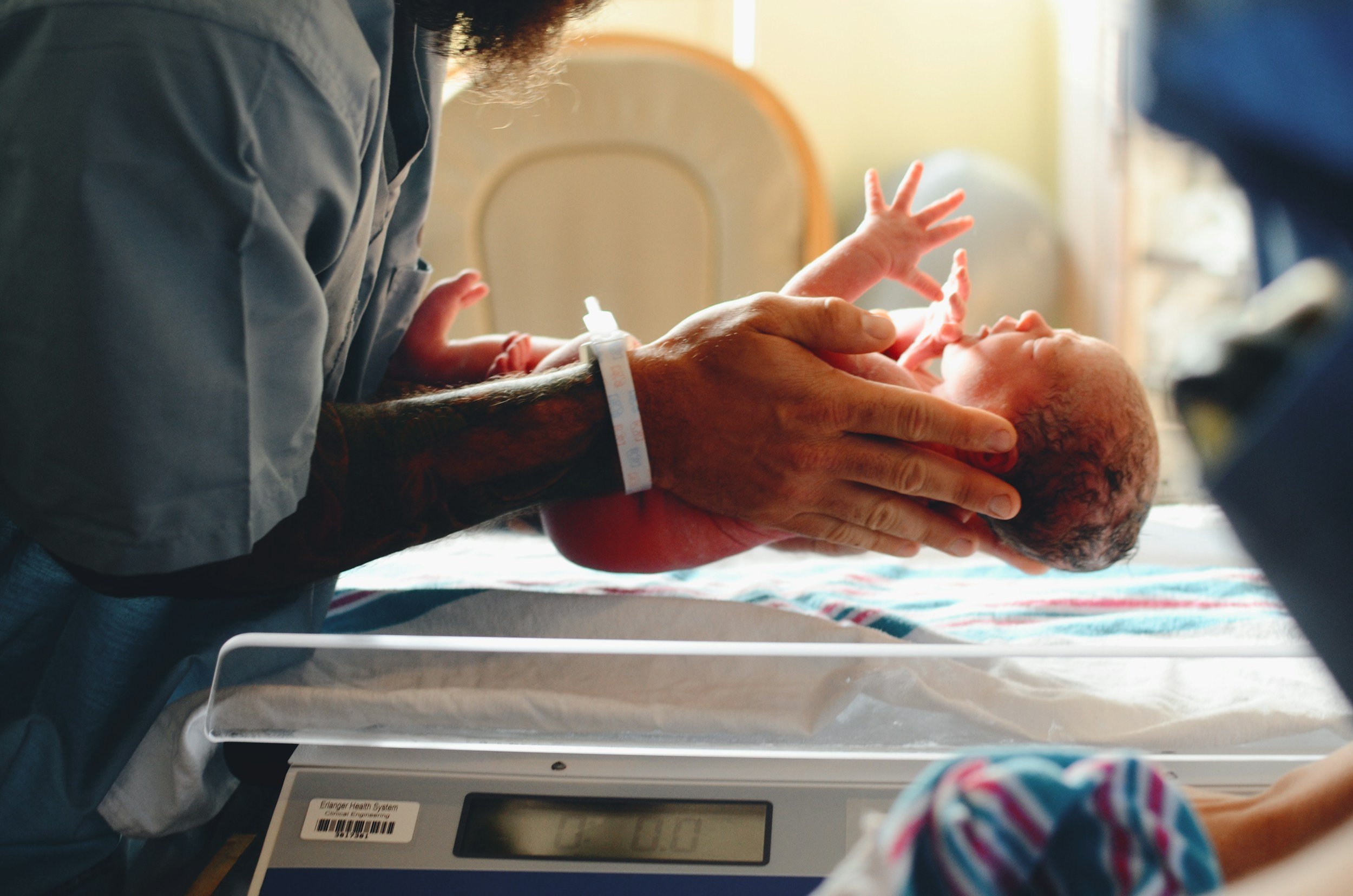
The birth dose against HBV prevents serious, life-long illness infants.
Q: Why would removing the birth dose worsen health inequities?
A: Families facing systemic inequities like poverty, unstable housing, and lack of insurance already receive limited prenatal care. They are the most likely to miss HBV screening. Babies from these families benefit the most from the universal birth dose of HBV.
If the birth dose is no longer required, insurance companies may not cover it, or hospitals may not carry it. This means that even parents who want to vaccinate their baby against this deadly disease may not be able to.
Q: Isn’t my baby at low risk?
A: All babies are at risk. Many adults with chronic HBV have no symptoms. Even if you don’t think you or the people close to you have Hepatitis B, they could still be carrying it and unknowingly pass it on to your baby. If your newborn is exposed, they have a 90% chance of the virus staying in their body for life.
Q: Is the Hep B vaccine safe for newborns?
A: Yes. It has been studied for more than 30 years and proven to be very safe. Don’t let talk of aluminum being in vaccines scare you. It’s there to help your baby’s immune system create a strong and lasting protection against HBV. Both breastmilk and infant formula have many times more aluminum than a vaccine. Taking small amounts of aluminum into the body is a healthy and normal part of daily life.
Q: So what should I do?
A: Vaccinate your baby for Hepatitis B at birth. It is safe, effective, and protects them from serious disease. Speak up when you hear misinformation regarding vaccines, and use your votes and your voice to push policymakers to follow scientific fact rather than hearsay when making decisions that affect the health of our nation.
